
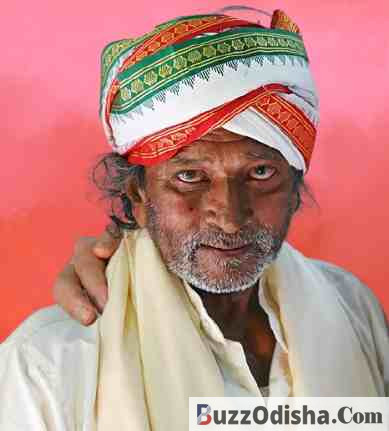
Simanchal Patro is a veteran Indian folk theatre artist from Odisha and one of the most celebrated living exponents of Prahallada Nataka, a traditional ritual theatre form of southern Odisha. Renowned for his portrayal of the demon king Hiranyakashipu — a role he performed for over five decades — Patro was awarded the Sangeet Natak Akademi Award in 1990 and was selected for the Padma Shri in January 2026, India’s fourth-highest civilian honour, for his lifelong contribution to Indian art and culture.
Quick Facts
| Born | 2 February 1927, Bamakei (Bomakei) village, Ganjam district, Odisha |
| Age | 99 (as of 2026) |
| Genre | Prahallada Nataka (Prahlad Natak) |
| Known for | Portrayal of Hiranyakashipu |
| Parents | Sura Patro (father), Bangari Debi (mother) |
| Awards | Sangeet Natak Akademi Award (1990); Padma Shri (2026) |
Early Life and Family Background
Simanchal Patro was born on 2 February 1927 in the village of Bamakei, also spelled Bomakei, in the Digapahandi block of Ganjam district, Odisha. He was born into a family with a deep, generations-old connection to the performing arts. His father, Sura Patro, was himself a respected Prahallada Nataka guru and performer, and it was under his father’s guidance that young Simanchal took his first steps into the art form.
Patro began his training as a child, first learning the role of Prahalada before moving on to the songs of the Sutradhara, the narrator figure central to the tradition. He went on to undergo rigorous training for around two decades under a succession of second-generation Prahallada Nataka masters, including Sri Kora Patra, Sri Laxman Satapathy, and later Sri Trinath Pradhan. Through this long apprenticeship, he mastered every dimension of the craft — dialogue delivery, raga (melodic structure), tala (rhythm), thani (the form’s distinctive stylized poses), and the physical and vocal discipline that the art demands.
Also Check – The Business of Sambalpuri Saree: From Traditional Looms to Global E-commerce Success
Rise to Prominence
Patro rose to prominence at the age of twenty, when he took on the lead role of Hiranyakashipu in a performance staged in his home village of Bamakei. The role would go on to define his career. Prahallada Nataka performances are notoriously demanding: a single show can run for up to twelve hours, with the lead performer required to sing more than 300 songs set across upwards of 35 ragas of classical Odissi music. Patro’s powerful, high-pitched voice and imposing stage presence made his interpretation of the tyrannical demon king so definitive that he came to be known locally as “The Hiranyakashipu.”
Over the following decades, he carried the tradition well beyond Ganjam district, performing extensively across India, including major stages in Delhi, Kolkata (then Calcutta), and Chennai (then Madras), introducing wider Indian audiences to this distinctive Odia theatrical form.
Preserving Prahallada Nataka
Beyond his own performances, Patro’s most enduring legacy may be his work as a teacher and institution-builder at a time when many of India’s traditional folk-theatre forms were fading. He founded the Lakshmi Nrusimha Natya Kala Sansad, a troupe based in his village of Bamakei, and trained generations of younger performers at his akhada (traditional training centre).
To ensure the art form’s survival beyond his own generation, Patro went on to establish several more akhadas across Ganjam district, in Nalabanta, Humma, Khajipalli, Sundhipalli, Padmapur, and Badagada. Through these centres, he passed on not just performance technique but the oral, musical, and ritual knowledge that underpins Prahallada Nataka — helping keep a centuries-old tradition alive in an era when folk theatre elsewhere in India was in steep decline.
Prahallada Nataka: The Art Form He Preserved
Prahallada Nataka, also known as Prahlad Natak, is a traditional ritual folk theatre native mainly to southern Odisha, particularly Ganjam district. It dramatizes the Hindu legend of Prahlada, the devoted young son of the asura king Hiranyakashipu, and his rescue by Lord Vishnu’s fierce Narasimha (man-lion) avatar. The form blends devotional storytelling with elaborate music, vigorous dance, operatic singing, melodramatic dialogue, and acrobatic performance, drawing on Odisha’s classical, folk, and tribal performing-arts traditions alike.
Awards and Honours
- 1990 — Sangeet Natak Akademi Award: Conferred by the President of India in recognition of Patro’s contribution to Prahlad Natak, this remains one of the highest official honours for the performing arts in India.
- 2026 — Padma Shri: In January 2026, the Ministry of Home Affairs announced that Patro, then 99 years old, had been selected for the Padma Shri in the field of Art, one of four Odisha recipients announced that year alongside educationist Mahendra Kumar Mishra, Santhali author Charan Hembram, and tie-and-dye artist Sarat Kumar Patra. On hearing the news, Patro said he was pleased that the recognition would draw more attention to the promotion of Odia art and culture.
- He has also received state-level honours in Odisha, including recognition from the Odisha Sangeet Natak Akademi for his mastery of the form and his role in training successive generations of performers.
Legacy
At 99 years old, Simanchal Patro stands as a living link to a nearly century-old performance tradition. Through his own decades on stage and his tireless work building akhadas and training students, he has been widely credited with single-handedly keeping Prahallada Nataka alive and thriving in Ganjam district at a time when many comparable folk-theatre forms across India were disappearing. His Padma Shri recognition in 2026 places him among a small group of grassroots folk artists honoured with India’s highest civilian awards for cultural preservation.
Also Check – Kanha Swain (Kanha Soy) Biography: Real Name, Age, Wife Tiki, Wikipedia & Jatra Career
Frequently Asked Questions
Who is Simanchal Patro? Simanchal Patro is a veteran Indian folk theatre performer from Odisha, best known as an exponent of Prahallada Nataka and for his portrayal of Hiranyakashipu.
When was Simanchal Patro born? He was born on 2 February 1927 in Bamakei village, Ganjam district, Odisha.
What award did Simanchal Patro receive in 2026? He was selected for the Padma Shri 2026 in the field of Art, for his contribution to preserving Prahallada Nataka.
What is Simanchal Patro famous for? He is famous for his portrayal of the demon king Hiranyakashipu in Prahallada Nataka performances, a role he played for over five decades, and for founding several akhadas that trained new generations of performers.