
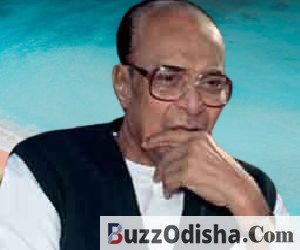
Biju Patnaik Biography
Few figures in modern Odisha’s history combine adventure, statesmanship and controversy quite like Bijayananda Patnaik, popularly known as Biju Patnaik. He was, at different points in his life, a fighter pilot, a wartime aviator, a covert operative in Indonesia’s freedom struggle, an industrialist, and twice the Chief Minister of Odisha. This Biju Patnaik biography article draws on Wikipedia, government and assembly records, contemporary reporting and historical accounts to present a fact-checked, comprehensive picture of his life.
Who Was Biju Patnaik?
Biju Patnaik (born Bijayananda Patnaik) was an Indian politician, aviator and businessman who served as the third Chief Minister of Odisha, first from 1961 to 1963 and again from 1990 to 1995. Beyond his political office, he is remembered chiefly for his exploits as a pilot: he flew a covert mission to Indonesia in 1947 to help Indonesian leaders escape Dutch-controlled territory during Indonesia’s freedom struggle. He later became a Union Cabinet minister in New Delhi and is widely regarded, in Odisha at least, as the architect of the state’s modern industrial base. He is also the father of Naveen Patnaik, who himself went on to become Odisha’s longest-serving Chief Minister.
Biju Patnaik Birth, Birthplace and Village
When and where was Biju Patnaik born?
He was born on 5 March 1916 in Cuttack, then part of Bihar and Orissa Province in British India (present-day Odisha).
While Cuttack was his birthplace, his family’s ancestral roots lay further south. According to Wikipedia’s sourced account, his family belonged to the Karan community, described as an aristocratic lineage, and his parents’ household was based at Ghumusar Nuagam near Bellaguntha in Ganjam district, roughly 80 km from Berhampur. A separate account in an Odisha government publication similarly links his family background to the Ganjam region, near Bhanjanagar. Readers should note the distinction: Cuttack is the confirmed city of his birth, while Ganjam district is where the family’s ancestral village and roots are traced.
Biju Patnaik Father and Mother
Two names appear consistently across independent sources for Biju Patnaik’s parents. His father was Lakshminarayan Patnaik, and his mother was Ashalata Patnaik (also referred to as Ashalata Devi in some records). Lakshminarayan Patnaik was a committed nationalist and a prominent figure of the Oriya (Odia) Movement, closely associated with two other architects of modern Odisha, Utkal Gourav Madhusudan Das and Utkalmani Gopabandhu Das. Multiple independent accounts corroborate this, describing Lakshminarayan as a judicial officer who was also active in the nationalist movement of his time. It is often said that Biju Patnaik’s fearlessness and patriotic instincts were shaped early on by his father’s political convictions.
Also check – Mohan Charan Majhi CM of Odisha Biography
Biju Patnaik Early Life and Education
Biju Patnaik’s schooling began at the Mission Primary School and Mission Christ Collegiate School in Cuttack. He subsequently enrolled at Ravenshaw College, Cuttack — the same institution that nationalist leader Subhas Chandra Bose had once attended — where he was also known as an active sportsman, having captained the college’s football, hockey, athletics and cricket teams.
His interest in flying appeared early and eventually overtook his academic plans. Accounts note that he discontinued a B.Sc. degree to train as a pilot instead, joining the Aeronautical Training Institute of India and, in 1930, the Delhi Flying Club, before joining Indian National Airways, a private airline, as a pilot in 1936. This early apprenticeship in the cockpit would come to define the rest of his public life.
Biju Patnaik as a Pilot and Aviator
Aviation was the thread that ran through nearly every chapter of Patnaik’s public career. He went on to join the Royal Indian Air Force (RIAF), and during the Second World War he flew transport missions in demanding conditions, eventually rising to head the Air Transport Command. His wartime flying took him well beyond routine duty: he undertook missions evacuating civilians from Japanese-occupied Rangoon, ferrying arms and logistics to Allied forces, and supporting Chinese and Soviet troops fighting the Axis powers, including supply runs connected to the Eastern Front and the Battle of Stalingrad. It was this wartime service to Soviet forces that later earned him Soviet recognition (discussed under Awards below).
He also used his flying skills covertly for India’s own freedom struggle: Patnaik air-dropped Quit India Movement leaflets for Indian soldiers serving under British command in Burma, and quietly flew freedom fighters between cities to help them evade British surveillance. Some accounts describe him ferrying underground leaders such as Jayaprakash Narayan, Ram Manohar Lohia and Aruna Asaf Ali during this period, though the precise dates and durations of his own detention by British authorities in the early 1940s are not consistently documented across sources and are best treated with some caution.
After Independence, when Pakistani tribal raiders invaded Jammu and Kashmir in October 1947, Patnaik, flying a Royal Indian Air Force World War II-era Spitfire and DC-3, carried soldiers into Kashmir and landed the first platoon of Indian troops in Srinagar, a mission historians say was pivotal in preventing the loss of the Kashmir Valley in the earliest days of the conflict. From 10 November 1947 he flew several more sorties transporting troops and evacuating civilians, and also supervised the requisitioning of civilian aircraft for the war effort.
His flying career fed directly into entrepreneurship: he founded Kalinga Airlines, which operated a fleet of Dakota aircraft in the early years of Indian independence, before the airline was merged into the newly nationalised Indian Airlines in 1953.
Biju Patnaik and India’s Freedom Movement
Patnaik’s role in the freedom movement was less about political organising and more about direct, high-risk aviation support to the nationalist cause — dropping propaganda material for Indian soldiers, quietly moving underground leaders, and later lending his flying skills to newly independent India’s earliest military emergencies in Kashmir. It was through this period of activity that he first became friends with Jawaharlal Nehru, a relationship that would shape much of his subsequent career, from the Indonesia mission to his later role as a trusted aviation resource for the Indian government.
Biju Patnaik and Indonesia
This episode remains the most celebrated chapter of Patnaik’s life. After Japan’s surrender in 1945, Sutan Sjahrir became independent Indonesia’s first Prime Minister under President Sukarno, but the Dutch, who had ruled Indonesia as a colony, moved to reassert control. By July 1947, Dutch forces had launched a military offensive — “Operation Product” — to recapture major cities including Jakarta.
Jawaharlal Nehru, who saw Indonesia’s struggle as a mirror of India’s own anti-colonial fight, had convened the Asian Relations Conference in Delhi in 1947 to build solidarity among newly independent and struggling Asian nations. When Sukarno wanted Sjahrir to leave Indonesia and attend this conference to rally international opinion against the Dutch, Sjahrir found himself unable to leave because the Dutch controlled all sea and air routes out of the country. Nehru turned to Patnaik, whom he knew to be an exceptionally skilled and daring pilot.
Patnaik and his wife flew into an improvised airstrip near Jakarta, and using leftover fuel from abandoned Japanese military stockpiles, took off again carrying Indonesian leaders, reaching India via Singapore on 24 July 1947. Some contemporary reports place the outbound flight into Indonesia on 21 or 22 July 1947, with the return journey completed by 24 July — the exact day-by-day sequence varies slightly between sources, though the outcome (leaders safely brought to Delhi within days) is consistently reported. When warned that Dutch forces would shoot his aircraft down, Patnaik reportedly responded that India did not recognise Dutch authority over Indonesia and that any Dutch aircraft over Indian skies would meet a similar fate — a remark widely repeated in accounts of the mission, though such quoted exchanges from decades-old oral history should be read as part of popular retelling rather than a verified transcript.
Patnaik’s engagement with Indonesia did not end there. His Kalinga Airlines fleet, flying out of Kolkata with refuelling stops at Mohanbari and Singapore, continued ferrying supplies to Indonesian resistance fighters until 1949, a period in which four fatal crashes occurred among his crews. In 1950, the Indonesian government offered Patnaik a piece of forest land and a grand residence in gratitude, which he declined, though he did accept an honorary Indonesian citizenship and the Bhoomi Putra award, an honour rarely given to a foreigner. This warm relationship with Sukarno also had a diplomatic afterlife: during the 1965 Indo-Pakistan war, an Odisha-based account records that Prime Minister Lal Bahadur Shastri sought Patnaik’s help as an informal emissary to persuade Sukarno to withdraw Indonesian naval assistance that had been extended to Pakistan — a claim that, while plausible given Patnaik’s ties to Sukarno, rests on a single first-person recollection and should be read as a historical anecdote rather than an official record.
Also check – Droupadi Murmu Biography
Biju Patnaik Political Career
Patnaik’s formal political career began under the Indian National Congress banner and stretched across nearly five decades. Between 1952 and 1990 he was elected to the Odisha Legislative Assembly seven times, and he also served in both houses of India’s Parliament — elected to the Rajya Sabha in 1971 and to the Lok Sabha four times, in 1977, 1980, 1984 and 1996.
He first became Chief Minister following the 1961 mid-term elections, but resigned in 1963 in support of the Kamaraj Plan, under which senior Congress leaders stepped down from government to focus on party organisation. In the years that followed, he moved away from the Congress, forming the Utkal Congress in 1969. He later re-established contact with veteran socialist leader Jayaprakash Narayan and joined the JP Movement as it gathered momentum from 1974.
When Prime Minister Indira Gandhi declared a national Emergency in June 1975, Patnaik was among the first opposition leaders arrested. He was detained under the Maintenance of Internal Security Act (MISA) and lodged in Rohtak Jail in Haryana, alongside other prominent opposition figures of the time who were also jailed during this period. Following his release after the Emergency was lifted, he was elected to the Lok Sabha from Kendrapara in 1977 and served as Union Minister for Steel and Mines under both the Morarji Desai and Charan Singh governments, until 1979.
Patnaik returned to the political forefront in Odisha with the renamed Janata Dal, and the party’s landslide win, taking roughly two-thirds of assembly seats in the 1990 Odisha elections, brought him back as Chief Minister for a second term, from 1990 to 1995. He remained politically active almost to the end of his life, winning re-election to the Lok Sabha in 1996 from the Aska constituency, a seat he held until his death in 1997.
Biju Patnaik as Chief Minister of Odisha
Patnaik’s first term as Chief Minister (1961–1963) is remembered as unusually productive for its brevity. Within roughly two years, his government’s initiatives included the founding of Paradip Port, the Sunabeda HAL factory, the Barbil iron works, the Rourkela Steel Plant, the Talcher Thermal Power project and the Balimela Hydro Power project. He also championed decentralised, small-scale rural industry through the Panchayat Industries scheme — within a year of its launch, this scheme had helped establish seven sugar mills, twenty tile-making units, ten carpentry units, ten small foundries and a paper mill among other rural enterprises, an effort that drew praise from then US Ambassador to India Chester Bowles and from Jayaprakash Narayan himself.
Odisha under Patnaik was also an early mover on grassroots democracy: the state was among the first to streamline Panchayati Raj and local self-government institutions, a vision he laid out in a notable Assembly speech on 20 November 1961. During his second term as Chief Minister, he reserved 33 percent of seats for women in Panchayati Raj institutions, a step that pre-dated and is said to have influenced the 73rd Constitutional Amendment Act of 1992, which mandated similar reservations nationally.
Major Achievements and Contributions of Biju Patnaik
- Paradip Port: Patnaik is regarded as the founding father of Paradip Port, Odisha’s primary and only major seaport, built to tap the state’s coastal and maritime potential.
- Rourkela Steel Plant: He played a key role in establishing India’s first integrated public-sector steel plant, at Rourkela.
- Industrial and educational institutions: Under his tenure, Odisha saw the establishment of engineering colleges at Burla and Rourkela, medical colleges at Burla and Berhampur, a Sainik School, and the Hindustan Aeronautics Limited (HAL) unit at Sunabeda.
- Kalinga Prize: In 1951, he instituted the Kalinga Prize for the popularisation of science, entrusting its administration to UNESCO, an award that continues to be given internationally.
- National security missions: During the 1962 Sino-Indian War, he helped transport supplies and weapons to Indian troops in what is now Arunachal Pradesh, and had earlier travelled to the United States as an informal defence adviser to Nehru to rally support after China’s occupation of Tibet.
Biju Patnaik Wife and Family
Biju Patnaik’s wife was Gyan Patnaik (referred to in some accounts as Gyanwati or Gyana Devi), who was herself a trained pilot. She flew alongside her husband on some of his covert missions, including the historic 1947 Indonesia rescue flight.
The couple had three children. Their eldest, Prem Patnaik, became a Delhi-based businessman; their younger son, Naveen Patnaik, followed his father into Odisha politics and went on to serve as Chief Minister of Odisha himself; and their daughter, Gita Mehta, became an internationally known English-language novelist, married to publisher Sonny Mehta.
Biju Patnaik Awards and Honours
Patnaik’s contributions were recognised by more than one country:
- Order of Lenin: For his wartime logistical support to the Soviet cause, he was awarded the Order of Lenin, the Soviet Union’s highest civilian decoration, and was later honoured with the Jubilee Medal marking 50 years of victory in the Great Patriotic War.
- Bhoomi Putra and honorary Indonesian citizenship: Awarded around 1950 in recognition of his role in Indonesia’s independence struggle.
- Bintang Jasa Utama (1995): Indonesia’s highest national award, conferred on Patnaik when the country celebrated its 50th Independence anniversary.
- Commemorative honours in India: A postal stamp and, in 2016, on his birth centenary, a five-rupee commemorative coin.
- Institutions named after him: These include Biju Patnaik International Airport in Bhubaneswar, Biju Patnaik University of Technology in Rourkela, and Biju Patnaik Stadium in Angul.
- Bharat Ratna demand: There has been a longstanding, still-unresolved demand — including formal resolutions passed by the Odisha Legislative Assembly and repeated appeals in Parliament — for Patnaik to be posthumously conferred India’s highest civilian award, the Bharat Ratna. As of 2026, this demand had not been acted upon by the Union Government.
Also check – Rajashree Mallick BJD Politician Biography
Biju Patnaik Death
When and where did Biju Patnaik die? He died on 17 April 1997 in New Delhi at the age of 81, following cardio-respiratory failure.
His funeral held a rare distinction: Patnaik is said to be the only Indian whose mortal remains were wrapped in the national flags of three countries — India, Russia and Indonesia — and his remains were consigned to flames at Swargadwar in Puri. In tribute, Indonesia observed seven days of state mourning, while Russia observed a day of mourning in his honour.
Biju Patnaik’s Legacy in Odisha and India
Biju Patnaik is widely remembered in Odisha as the architect of the state’s modern industrial economy, and his birth anniversary on 5 March has historically coincided with Panchayati Raj Day in the state, reflecting his role in decentralised governance. His legacy remains politically significant even decades after his death — in 2025, the Odisha government’s decision to delink his birth anniversary from the official observance of Panchayati Raj Day drew criticism from his son Naveen Patnaik’s party, and in 2026 a Bharatiya Janata Party MP’s remarks alleging Patnaik had links to intelligence agencies triggered a political controversy before the MP issued an apology. Such episodes illustrate that Biju Patnaik’s historical legacy continues to be actively contested and invoked in contemporary Odisha politics, rather than being settled to universal agreement — a reminder that some parts of his story remain live political subjects rather than closed historical fact.
Frequently Asked Questions about Biju Patnaik biography
What was Biju Patnaik’s real name?
His full given name was Bijayananda Patnaik; “Biju” was the popular short form by which he was known throughout his public life.
Where was Biju Patnaik born?
He was born in Cuttack, Odisha, on 5 March 1916.
What was Biju Patnaik’s village name?
His family’s ancestral roots are traced to Ghumusar Nuagam near Bellaguntha in Ganjam district, though he himself was born in Cuttack city.
Who was Biju Patnaik’s father?
His father was Lakshminarayan Patnaik, a nationalist leader associated with the Odia Movement.
Who was Biju Patnaik’s mother?
His mother was Ashalata Patnaik.
Who was Biju Patnaik’s wife?
He was married to Gyan Patnaik, who was also a trained pilot and accompanied him on some of his aviation missions.
How many children did Biju Patnaik have?
He had three children: Prem Patnaik, Naveen Patnaik and Gita Mehta.
Why was Biju Patnaik famous?
He was famous as a daring wartime and freedom-era pilot, for his role in rescuing Indonesian leaders from Dutch-controlled territory in 1947, and for his two terms as Chief Minister of Odisha during which the state saw significant industrialisation.
Was Biju Patnaik a pilot?
Yes. He trained as a pilot in the early 1930s, served with the Royal Indian Air Force during World War II, and later founded his own airline, Kalinga Airlines.
What was Biju Patnaik’s role in Indonesia?
In July 1947, he flew a covert mission into Dutch-controlled Indonesia and helped bring Indonesian leaders to India, supporting Indonesia’s independence struggle; he was later given honorary Indonesian citizenship and the country’s highest civilian award.
How many times was Biju Patnaik Chief Minister of Odisha?
Twice — from 1961 to 1963, and again from 1990 to 1995.
When did Biju Patnaik die?
He died on 17 April 1997, in New Delhi, at the age of 81.
Where is Biju Patnaik Airport?
Biju Patnaik International Airport is located in Bhubaneswar, the capital of Odisha, and is named in his honour.
What is Biju Patnaik remembered for?
He is remembered as a freedom fighter, a daring aviator, an industrial pioneer of Odisha, and twice its Chief Minister, credited with laying the foundations of the state’s modern industrial and infrastructural development.
References