
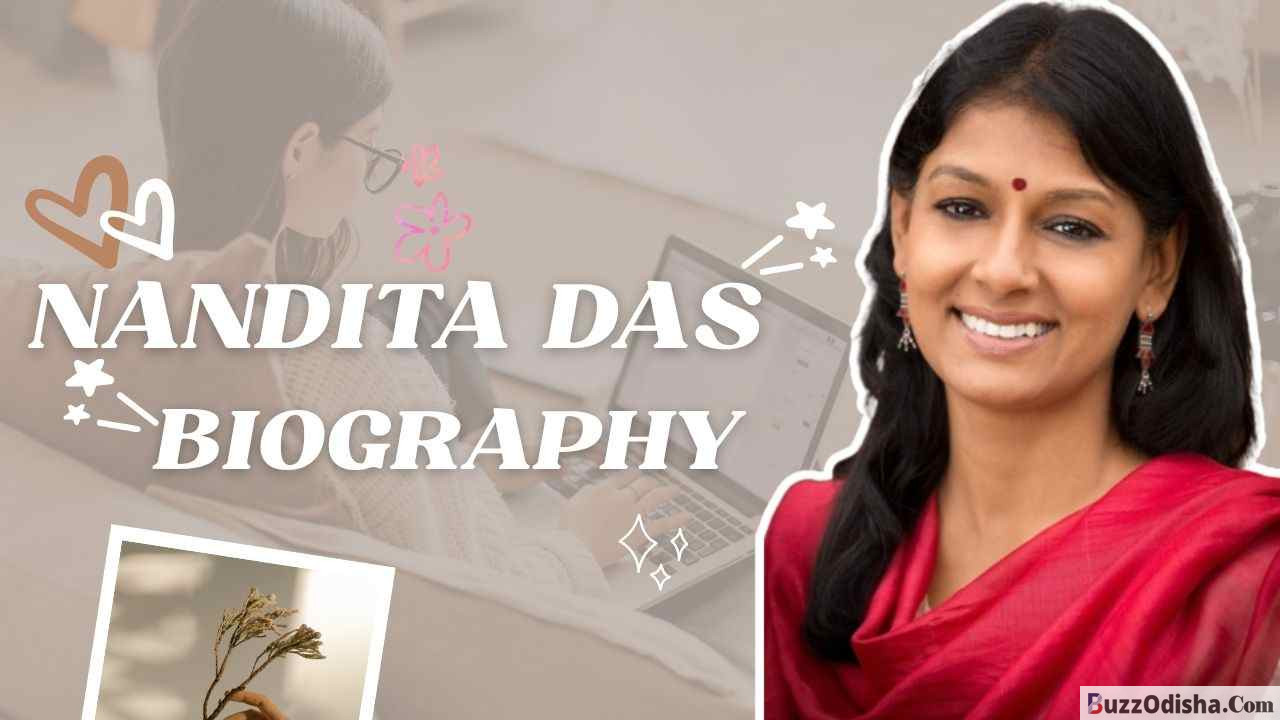
Nandita Das is an Indian actor, filmmaker, writer and social advocate whose work spans more than three decades of parallel and independent cinema. Best known to audiences for Fire (1996) and Earth (1998), she has acted in over 40 feature films across ten languages and later became a director in her own right with Firaaq (2008), Manto (2018) and Zwigato (2023). Das has twice served on the jury of the Cannes Film Festival, holds France’s Chevalier de l’Ordre des Arts et des Lettres, and has spent years campaigning against skin-colour discrimination through the “Dark Is Beautiful” and “India’s Got Colour” campaigns. Trained in social work before she trained in cinema, she treats the two as connected: her films consistently return to questions of communal violence, gender and economic precarity.
Quick Facts
| Field | Details |
| Full Name | Nandita Das |
| Profession | Actor, Director, Writer, Producer, Social Advocate |
| Date of Birth | 7 November 1969 |
| Age (as of August 2026) | 56 (turns 57 in November 2026) |
| Birthplace | Mumbai (then Bombay), Maharashtra, India — see note below |
| Raised in | New Delhi |
| Nationality | Indian |
| Ethnic/Family background | Odia (Oriya) family; not Bengali — a common misconception |
| Education | Sardar Patel Vidyalaya, Delhi; B.A. Geography, Miranda House, Delhi University; Master of Social Work, Delhi School of Social Work, Delhi University |
| Known For | Fire, Earth, Bawandar, Firaaq, Manto, Zwigato |
| Directorial Films | Firaaq (2008), Manto (2018), Zwigato (2023) |
| Languages worked in | Hindi, English, Bengali, Malayalam, Tamil, Telugu, Urdu, Marathi, Odia, Kannada |
| Years Active | 1987–present |
| Notable Honour | Chevalier de l’Ordre des Arts et des Lettres (France, 2011) |
Early Life and Family
Nandita Das was born on 7 November 1969 into an artistically inclined Odia family. Her father, Jatin Das, is a well-known Indian painter, and her mother, Varsha Das, is a writer; both instilled in her an early exposure to art, literature and public life. Although she was born in Mumbai, she grew up largely in New Delhi. Das has described her upbringing as liberal and inclusive by default, saying that ideas like feminism and secularism were part of her environment well before she encountered the words for them.
As a college student in Delhi, Das joined Jana Natya Manch, the street-theatre group led by activist Safdar Hashmi, which became her first serious engagement with performance and with using art for social commentary — a combination that would define her later career in cinema.
Education
Das attended Sardar Patel Vidyalaya in New Delhi. She went on to earn a bachelor’s degree in Geography from Miranda House, University of Delhi, followed by a Master of Social Work from the Delhi School of Social Work, also affiliated with Delhi University. She has said her social work training shaped how she approaches storytelling — with an interest in structural issues (communal conflict, gender violence, labour precarity) rather than only individual drama. In 2014, she was selected as a Yale World Fellow at Yale University, one of sixteen emerging global leaders chosen from nearly 4,000 applicants that year, and she has since spoken at institutions including MIT, Tufts University, Cornell University and the University of Pennsylvania, where in March 2026 she delivered the CASI Spring 2026 Saluja Global Fellow Lecture, “My Journey from Social Work to Cinema.”

Nandita Das’s Acting Career
Early Acting Career
Das’s earliest screen credit was the 1987 Hindi telefilm Bangle Box. Her feature-film work followed soon after, and through the early 1990s she built a reputation in Bengali and Hindi parallel cinema, working with veteran directors such as Mrinal Sen and Shyam Benegal, whose films favoured social realism over commercial formula.
Breakthrough and Major Performances
Das’s breakthrough came with Deepa Mehta’s Fire (1996), in which she starred opposite Shabana Azmi in a film that explored a same-sex relationship between two sisters-in-law — a subject that was highly controversial in India at the time and drew both acclaim and organised protest. She followed it with Mehta’s Earth (1998), set during the 1947 Partition of India, opposite Aamir Khan. Other significant performances include Bawandar (2000), directed by Jagmohan Mundhra, in which she played a rural social worker; the Tamil film Kannathil Muthamittal (2002), directed by Mani Ratnam; the Tamil film Azhagi (2002); and Kamli (2006). She also appeared in Adoor Gopalakrishnan’s Malayalam ensemble film Naalu Pennungal and in Before the Rains (2007), a British-Indian period drama directed by Santosh Sivan.
Regional and Multilingual Cinema
One of the defining features of Das’s acting career is its linguistic range. She has acted in more than 40 feature films across ten languages — Hindi, English, Bengali, Malayalam, Tamil, Telugu, Urdu, Marathi, Odia and Kannada — working with directors including Mrinal Sen, Adoor Gopalakrishnan, Shyam Benegal, Deepa Mehta and Mani Ratnam. This range positioned her as a figure of India’s parallel and regional cinema rather than mainstream Bollywood, even as some of her films reached wide international audiences.
Theatre
Das’s stage work began with Jana Natya Manch and has continued alongside her screen career. In 2014, she co-wrote, directed and acted in the play Between the Lines. In 2017, she acted in Khamosh! Adalat Jaari Hai, a Cineplay stage production based on Vijay Tendulkar’s Marathi play Shantata! Court Chalu Aahe, appearing alongside Saurabh Shukla and Swanand Kirkire.
Also check – Satabdi Suryasnata Biography
Filmography (Selected)
The following highlights reflect her most widely documented and critically discussed screen credits as an actor; a fuller list appears in the Filmography section below.
| Year | Film | Language | Director |
| 1996 | Fire | Hindi/English | Deepa Mehta |
| 1998 | Earth | Hindi/English | Deepa Mehta |
| 2000 | Bawandar | Hindi | Jagmohan Mundhra |
| 2002 | Kannathil Muthamittal | Tamil | Mani Ratnam |
| 2002 | Azhagi | Tamil | Thankar Bachan |
| 2006 | Kamli | Malayalam | Shyamaprasad |
| 2007 | Before the Rains | English | Santosh Sivan |
Nandita Das as a Director
Das moved from acting into directing in the mid-2000s, drawn by a desire to shape entire narratives rather than individual performances. Her three feature films as director — Firaaq, Manto and Zwigato — share a recurring focus on how large social forces (communal violence, censorship, gig-economy precarity) play out in the lives of ordinary people. She has said that her filmmaking, like her social-work training, is oriented toward giving voice to experiences that otherwise remain silent.
Firaaq
Firaaq (2008) was Nandita Das’s directorial debut. Described by Das as a work of fiction “based on a thousand true stories,” the film is set a month after the 2002 Gujarat riots and interweaves multiple storylines over a 24-hour period, following characters from different social strata as they confront the aftermath of communal violence. The film premiered at the Toronto International Film Festival, subsequently travelled to more than 50 film festivals worldwide, and won over 20 awards. It also earned Das the Chevalier de l’Ordre des Arts et des Lettres from the French government in 2011, in recognition of her contribution to Indo-French cinematic cooperation.
Manto
Manto (2018) is Das’s second directorial feature, based on the life and work of Saadat Hasan Manto, the Urdu short-story writer known for his unflinching depictions of Partition-era violence and for the obscenity trials his writing provoked. The film stars Nawazuddin Siddiqui in the title role and Rasika Dugal, and covers a turbulent period in Manto’s life spanning his final years in Bombay and his subsequent migration to Lahore after Partition. Manto premiered at the Cannes Film Festival in the Un Certain Regard section in 2018 and later screened at the Toronto International Film Festival. Das spent six years developing the project; her first book, Manto & I (Aleph Book Company), documents that process through images and writing. The film was the first production of Nandita Das Initiatives (NDI), the company she founded in 2016.
Zwigato
Zwigato (2023) is Das’s third directorial feature. Set in Bhubaneswar, Odisha, it follows Manas, a former factory floor manager who is forced to take up gig work as a food-delivery rider after losing his job, and the strain this places on his family. The film stars comedian Kapil Sharma, in a rare dramatic role, opposite Shahana Goswami. Zwigato had its world premiere at the Toronto International Film Festival in 2022, its Asian premiere at the Busan International Film Festival, and its Indian premiere at the International Film Festival of Kerala, before releasing theatrically in India on 17 March 2023; it is available to stream on Amazon Prime Video. The film examines the gig economy’s rating- and incentive-driven labour conditions and was produced by Das’s own company, Nandita Das Initiatives, in collaboration with Applause Entertainment.
Nandita Das and the Cannes Film Festival
Das has served on the jury of the Cannes Film Festival on two occasions. In 2005, she sat on the main competition jury alongside Fatih Akin, Javier Bardem, Salma Hayek, Benoît Jacquot, Emir Kusturica, Toni Morrison, Agnès Varda and John Woo. In 2013, she served on the Cinéfondation and short films jury with Jane Campion, Maji-da Abdi, Nicoletta Braschi and Semih Kaplanoğlu. Separately, her film Manto was an official selection at Cannes 2018, screening in the Un Certain Regard section — a competitive sidebar, though Manto is documented as a festival selection rather than an award winner at Cannes. Readers should note the distinction: jury service, official selection and award-winning are three different forms of Cannes recognition, and Das’s Cannes record includes the first two.
Social Activism and Advocacy
Das’s activism centres on gender equality, communal harmony and, most visibly, colourism. In 2013 she became the face of the “Dark Is Beautiful” campaign, launched by the organisation Women of Worth in 2009 to challenge the Indian entertainment and cosmetics industries’ preference for lighter skin. She has spoken publicly about being asked on film sets to lighten her skin for certain roles. In 2019, the campaign was reworked as “India’s Got Colour,” for which Das produced and co-directed, with Mahesh Mathai, a public-service-announcement music video featuring several prominent Indian film artists; the initiative was supported by UNESCO.
Das has also worked on children’s rights and HIV/AIDS awareness, and has spoken out against violence toward women, including during the #MeToo movement. In 2009, she was appointed Chairperson of the Children’s Film Society of India. In 2020, during the COVID-19 lockdown, she wrote, directed, produced and acted in the short film Listen to Her, which addressed the rise in domestic violence and unpaid domestic labour burdening women during that period; the project received support from UNESCO and other UN bodies.
Writing, Theatre and Other Work
Beyond acting and directing, Das has built a body of writing and public-facing work. She wrote a monthly column, “Last Word,” for The Week. Her 2019 book, Manto & I, chronicles the six-year making of Manto. She also edited Jatin Das: A Retrospective 1963–2023, published alongside a retrospective exhibition of her father’s six-decade painting career at the National Gallery of Modern Art. Das has narrated the children’s audiobook series Under the Banyan and Charkha Audiobooks’ recording of Mahatma Gandhi’s autobiography, The Story of My Experiments with Truth, and voiced a Bengal tiger in a 2007 episode of the animated children’s series Wonder Pets. In 2016, she founded Nandita Das Initiatives (NDI), the production company behind Manto, the “India’s Got Colour” video, Listen to Her, and Zwigato.
Awards and Honours
A selection of Das’s most significant, independently documented awards and honours:
| Year | Award / Honour | Category / Reason | Status |
| 2011 | Chevalier de l’Ordre des Arts et des Lettres | Contribution to Indo-French cinematic cooperation | Conferred |
| 2011 | International Women’s Forum Hall of Fame | Contributions to arts and world cinema (first Indian inductee) | Inducted |
| 2014 | Yale World Fellow | Global leadership (Yale University) | Selected |
| 2018 | Bharatiya Manavata Vikas Puraskar | Social justice advocacy through cinema (Power Brands) | Conferred |
| 2005 & 2013 | Cannes Film Festival Jury Member | Main competition (2005); Cinéfondation & short films (2013) | Jury service |
| 2008–2010 | Firaaq — festival awards | More than 20 awards across 50+ festivals (various categories) | Won (multiple, various festivals) |
Personal Life
Das married Soumya Sen in 2002; the couple co-founded Leapfrog, a media company producing socially conscious advertising films, before divorcing in 2007. She later married Mumbai-based industrialist Subodh Maskara on 2 January 2010 and relocated to Mumbai. The couple’s son, Vihaan, was born on 11 August 2010. In January 2017, Das and Maskara announced that they had separated. Das has described herself as an atheist, saying that if she aligned with any belief system it would probably be Buddhism.
Also check – Sonali Sharmistha Biography
Nandita Das’s Latest Work
In November 2025, trade reports confirmed that production had wrapped on Nadhi, an independent Telugu-language feature written and directed by Aditya Vempaty, in which Das stars opposite veteran actor Nasser (also credited as Nassar). Set in the forests of Andhra Pradesh, the film follows the last members of an ancient tribe holding onto their traditional way of life amid drought and the construction of a dam near their habitat; Das plays a character named Devi. The production wrap was announced at the American Film Market, and as of this writing no theatrical release date has been publicly confirmed — the film should currently be considered in post-production rather than released.
In March 2026, Das delivered the CASI Spring 2026 Saluja Global Fellow Lecture, “My Journey from Social Work to Cinema,” as part of a week-long fellowship at the University of Pennsylvania’s Center for the Advanced Study of India — an appearance consistent with her long-running speaking-circuit presence at academic institutions.
Released: Zwigato (2023, streaming on Amazon Prime Video).
In post-production / announced: Nadhi (Telugu; production wrapped November 2025; no confirmed release date).
Last updated: 18 August 2026.
Nandita Das’s Contribution to Indian Cinema
Das’s significance rests less on box-office numbers than on the consistency of her subject matter across three decades and two roles — actor and director. As a performer, she became closely associated with parallel and regional cinema that took on subjects mainstream Hindi cinema largely avoided: same-sex desire (Fire), Partition (Earth), custodial and caste-based sexual violence (Bawandar), and cross-border reconciliation (Kannathil Muthamittal). As a director, she extended that pattern into filmmaking itself, choosing subjects — the 2002 Gujarat riots (Firaaq), a censored Urdu writer (Manto), and gig-economy labour (Zwigato) — that other filmmakers of her generation largely left unexamined. Her multilingual acting career and Cannes jury service also gave Indian parallel cinema a recurring point of international visibility outside the usual Bollywood pipeline, while her advocacy work, particularly on colourism, moved a subject long treated as a private cosmetic concern into public industry debate.
6. FAQ
Who is Nandita Das?
Nandita Das is an Indian actor, film director, writer and social advocate, known for films including Fire, Earth and Bawandar as an actor, and Firaaq, Manto and Zwigato as a director.
What is Nandita Das famous for?
She is best known for her performances in Deepa Mehta’s Fire (1996) and Earth (1998), and for directing Manto (2018), a biographical film about writer Saadat Hasan Manto that premiered at Cannes.
How old is Nandita Das?
Nandita Das was born on 7 November 1969, making her 56 years old as of August 2026; she turns 57 in November 2026.
When was Nandita Das born?
She was born on 7 November 1969. Sources differ on her exact birthplace: Wikipedia’s biography states Mumbai, while she grew up mainly in New Delhi; some other sites state New Delhi as her birthplace.
Where did Nandita Das study?
She studied at Sardar Patel Vidyalaya, New Delhi, earned a B.A. in Geography from Miranda House, University of Delhi, and a Master of Social Work from the Delhi School of Social Work.
Is Nandita Das Bengali?
No. Nandita Das comes from an Odia (Oriya) family — her father, painter Jatin Das, traces his roots to Odisha. The perception that she is Bengali likely stems from her acting in numerous Bengali-language films and working with Bengali directors such as Mrinal Sen, not from her actual family background.
Who is Nandita Das’s husband?
Das was previously married to Soumya Sen (2002–2007) and later to industrialist Subodh Maskara, whom she married in January 2010; the two separated in January 2017. She is not currently known to be married.
Does Nandita Das have children?
Yes, she has one son, Vihaan, born on 11 August 2010, from her marriage to Subodh Maskara.
How many movies has Nandita Das acted in?
She has acted in more than 40 feature films across ten languages, according to her Wikipedia biography and other verified sources.
Which movies has Nandita Das directed?
She has directed three feature films: Firaaq (2008), Manto (2018) and Zwigato (2023).
Was Nandita Das a Cannes jury member?
Yes. She served on the main competition jury at Cannes in 2005 and on the Cinéfondation and short films jury in 2013.
What awards has Nandita Das won?
Her honours include France’s Chevalier de l’Ordre des Arts et des Lettres (2011), induction into the International Women’s Forum’s International Hall of Fame as the first Indian honouree (2011), and the Bharatiya Manavata Vikas Puraskar (2018). Her film Firaaq won more than 20 awards across film festivals.
What is Nandita Das’s latest movie?
Her most recent released film as director is Zwigato (2023). As an actor, her latest project is Nadhi, a Telugu-language film that finished production in November 2025 and had not received a confirmed release date as of this writing.
Also check – Khordha Toka Biography
7. Filmography
Films as Actor (Selected)
| Year | Film | Language | Director |
| 1987 | Bangle Box (telefilm) | Hindi | — |
| 1996 | Fire | Hindi/English | Deepa Mehta |
| 1998 | Earth | Hindi/English | Deepa Mehta |
| 2000 | Bawandar | Hindi | Jagmohan Mundhra |
| 2001 | Aks | Hindi | Rakeysh Omprakash Mehra |
| 2002 | Kannathil Muthamittal | Tamil | Mani Ratnam |
| 2002 | Azhagi | Tamil | Thankar Bachan |
| 2002 | Aamaar Bhuvan | Bengali | Mrinal Sen |
| 2006 | Kamli | Malayalam | Shyamaprasad |
| 2007 | Before the Rains | English | Santosh Sivan |
| 2018 | Dhaad | Gujarati | Kaushik Ghelani |
| 2019 | Albert Pinto Ko Gussa Kyun Aata Hai (remake) | Hindi | Soumitra Ranade |
| 2025 (production wrapped) | Nadhi | Telugu | Aditya Vempaty |
Films as Director
| Year | Film | Notes |
| 2008 | Firaaq | Directorial debut; premiered at Toronto International Film Festival; 20+ festival awards |
| 2018 | Manto | Biographical drama on Saadat Hasan Manto; premiered at Cannes (Un Certain Regard) and TIFF |
| 2023 | Zwigato | Gig-economy drama starring Kapil Sharma; premiered at TIFF; released in India 17 March 2023 |
Films as Producer
Through Nandita Das Initiatives (founded 2016), Das has produced Manto (2018), the PSA music video India’s Got Colour (2019), the short film Listen to Her (2020), and Zwigato (2023, with Applause Entertainment).
Other Screen and Audio Work
- Narrator, Under the Banyan (children’s audiobook series)
- Narrator, The Story of My Experiments with Truth (Charkha Audiobooks, Mahatma Gandhi’s autobiography)
- Voice actor, Wonder Pets (2007 episode, as a Bengal Tiger)
- Playwright/director/actor, Between the Lines (2014 stage play)
- Actor, Khamosh! Adalat Jaari Hai (2017 stage production)
8. Awards/Honours
| Year | Award/Honour | Category/Reason | Work | Result |
| 2000 | Cairo International Film Festival | Best Actress | Bawandar | Won |
| 2002 | Cannes Film Festival | Special Prize (as documented by secondary sources) | Kannathil Muthamittal | Won |
| 2006 | Asian Festival of First Films | Best Actress | Kamli | Won |
| 1998 | Santa Monica Film Festival | Best Debut (ensemble recognition) | Earth | Won |
| 2008–2010 | Various international festivals | Best Film / Special Jury / other categories (20+ awards, 50+ festivals) | Firaaq | Won (multiple) |
| 2011 | French Government | Chevalier de l’Ordre des Arts et des Lettres | Career honour | Conferred |
| 2011 | International Women’s Forum | International Hall of Fame (first Indian inductee) | Career honour | Inducted |
| 2018 | Power Brands | Bharatiya Manavata Vikas Puraskar | Career/advocacy honour | Conferred |