
Last checked: 19 November 2026
Konark Sun Temple at a glance
- Where: Konark, Puri district, on the Odisha coast
- Distance: about 35 km from Puri, about 65 km from Bhubaneswar
- Built: around 1250 CE by King Narasimhadeva I of the Eastern Ganga dynasty
- Status: UNESCO World Heritage Site since 1984; protected by the Archaeological Survey of India (ASI)
- Timings: open from sunrise to sunset (in winter, about 6 AM to 6 PM)
- Entry fee (Indians): about ₹40 in cash, ₹35 online or by card; children under 15 free
- Time needed: 1.5 to 2 hours, plus the evening light and sound show
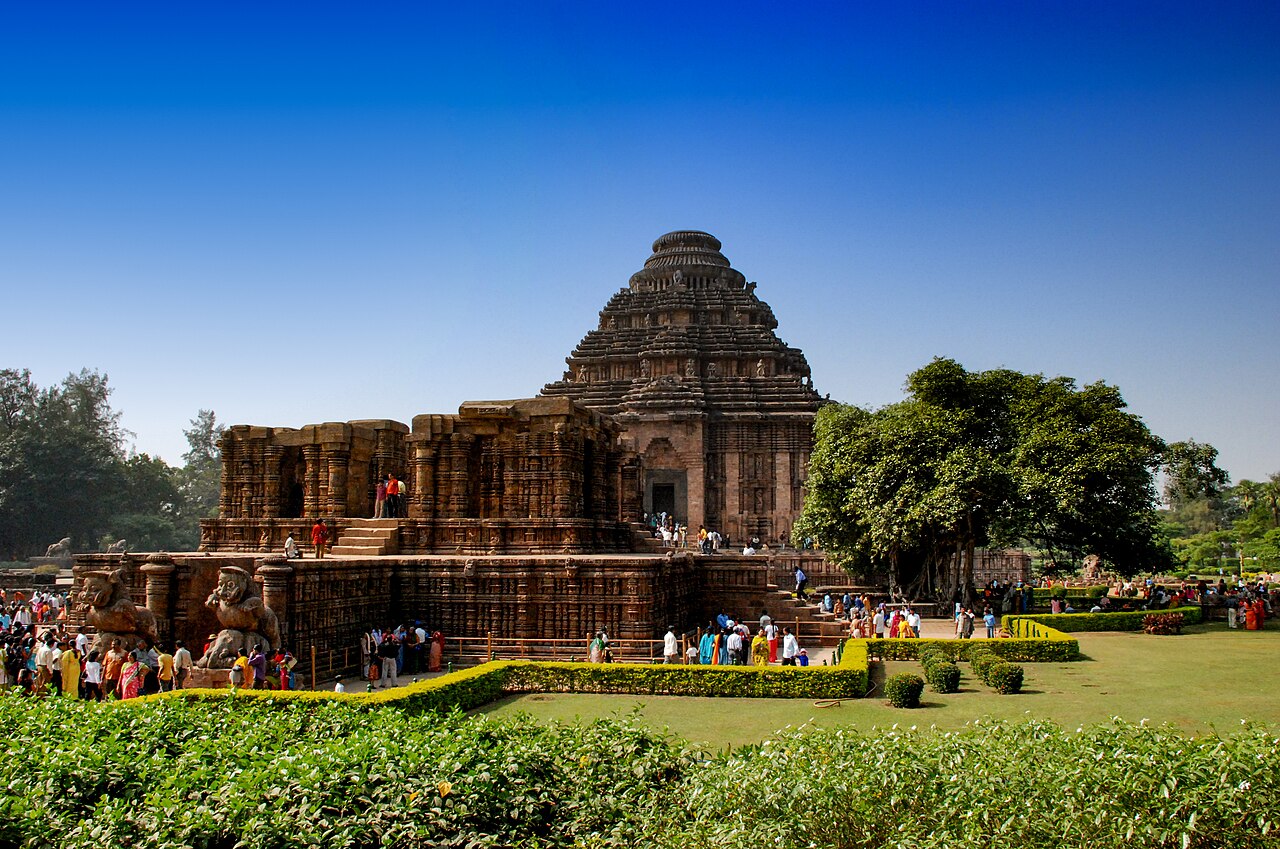
The Konark Sun Temple is Odisha’s most famous monument after the Jagannath Temple in Puri. It was built as a giant stone chariot for Surya, the Sun God, with carved wheels and horses. Today the main tower has fallen, but the surviving hall, wheels and sculptures still make it one of India’s greatest heritage sites.
This guide covers timings, ticket prices, the light and sound show, how to reach from Puri and Bhubaneswar, what to see inside, and nearby places.
Featured photo: Konark Sun Temple. Photo: Bikashrd, CC BY-SA 4.0, via Wikimedia Commons
Konark Sun Temple timings
| What | Timing |
|---|---|
| Temple complex | Sunrise to sunset, every day. In winter (November–February) it has been open about 6 AM to 6 PM. |
| Light and sound show | Evenings after the temple closes. In winter, two shows have been held, around 6:30 PM and 7:30 PM. Timings change by season. |
| ASI museum (nearby) | Daytime; closed on Fridays |
Best time of day: arrive by 7–8 AM for soft light and fewer crowds, or come around 4 PM, see the temple before sunset, and stay for the evening show.
Konark Sun Temple entry fee
| Visitor | Ticket (approx.) |
|---|---|
| Indian citizens (and SAARC/BIMSTEC) | ₹40 in cash; ₹35 online or by card |
| Foreign visitors | ₹600 in cash; ₹550 online or by card |
| Children below 15 | Free |
| Light and sound show | Separate ticket (it has been around ₹50) |
- Buy online: book through the ASI ticketing website to skip the counter queue, especially on weekends.
- Free entry days: ASI waives the fee on some days, such as World Heritage Day, during World Heritage Week in November, and during the Magha Saptami festival.
Light and sound show
The light and sound show tells the story of the temple using projections on the monument, with narration in Odia, Hindi and English. It is held in front of the main hall after the temple closes for the day. Shows can be cancelled in heavy rain. Buy tickets at the venue or online, and arrive 20–30 minutes early in the busy season.
What to see inside the complex
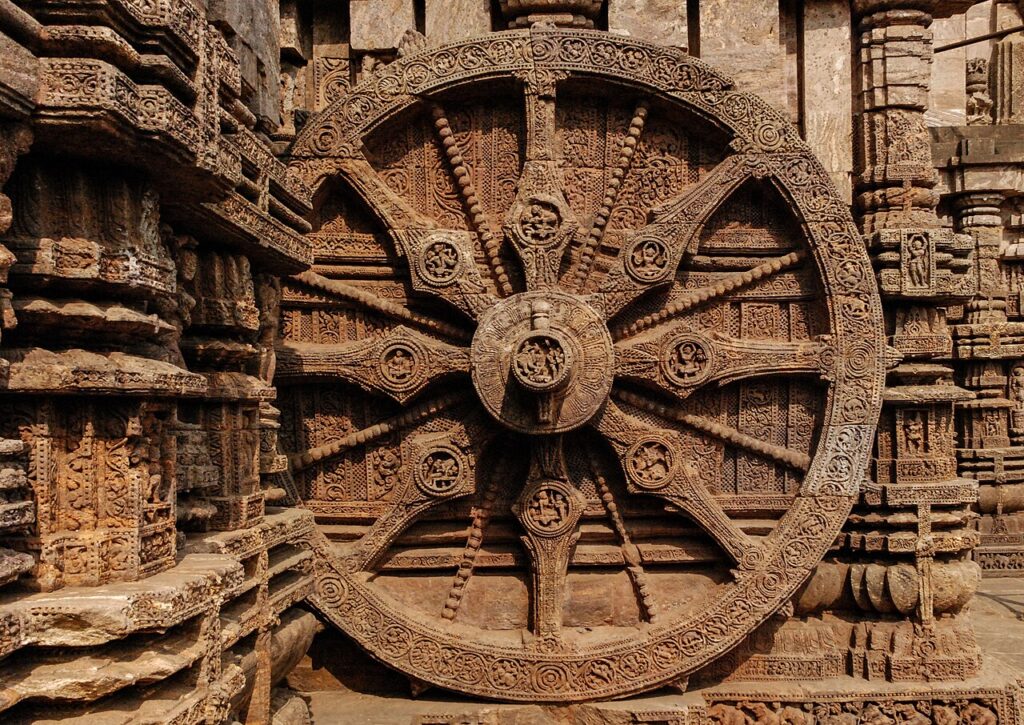
- The chariot wheels: the temple is designed as Surya’s chariot with 24 carved wheels. Some are said to work like sundials.
- The seven horses: carved at the front, pulling the chariot.
- Jagamohana (assembly hall): the large surviving structure you see today. The main tower behind it collapsed centuries ago.
- Nata Mandap (dance hall): admire it from outside. ASI stopped visitors from climbing onto it in November 2025 to protect the structure.
- Sculptures: musicians, dancers, animals and daily-life scenes cover the walls. Hire an ASI-approved guide at the entrance to understand the details.
How to reach Konark
| From | Distance | How |
|---|---|---|
| Puri | About 35 km | Bus, taxi or auto along the scenic Marine Drive (about 1 hour) |
| Bhubaneswar | About 65 km | Bus or taxi (about 1.5–2 hours) |
| Bhubaneswar airport | About 65 km | Taxi |
Konark has no railway station. The nearest stations are Puri and Bhubaneswar. Regular buses run from both cities.
Konark Dance Festival
Every year from 1 to 5 December, Odisha Tourism holds the Konark Festival of classical dance in an open-air auditorium with the Sun Temple as the backdrop. Performances run in the evening. The International Sand Art Festival at nearby Chandrabhaga Beach is usually held on the same dates. Expect crowds and higher hotel prices in Puri and Konark at this time.
Places to visit near Konark
- Chandrabhaga Beach: a few kilometres away; good for sunrise.
- ASI Archaeological Museum: original sculptures from the temple; closed on Fridays.
- Ramachandi Temple and beach: on the Marine Drive between Konark and Puri, where the Kushabhadra river meets the sea.
- Puri: combine Konark with the Jagannath Temple and Puri beach in a day.
Simple day plan: Puri – Konark – Puri
| Time | Plan |
|---|---|
| Early morning | Sunrise at Chandrabhaga Beach |
| Morning | Sun Temple visit with a guide (about 2 hours) |
| Midday | ASI museum (not on Fridays), then lunch |
| Afternoon | Drive back along Marine Drive with a stop at Ramachandi |
| Alternative | Arrive at 4 PM instead and stay for the evening light and sound show |
Best time to visit
October to March is the most comfortable. December is the busiest month because of the Konark Festival and holidays. Summer (April–June) is very hot and humid on the coast, so go early in the morning.
Practical tips
- Carry a hat, sunscreen and water. There is little shade inside the complex.
- Wear comfortable footwear; you will walk on stone and sand.
- Use only ASI-approved guides and agree the fee first.
- Do not climb on the structure or touch carvings. It is a protected monument.
- Drones are not allowed without permission at protected monuments.
Frequently asked questions
What are the Konark Sun Temple timings?
It is open from sunrise to sunset every day. In winter this has been about 6 AM to 6 PM.
What is the entry fee for Konark Sun Temple?
About ₹40 in cash or ₹35 online for Indian visitors. Children under 15 enter free. Foreign visitors pay about ₹600 in cash or ₹550 online.
Is the light and sound show worth it?
Yes, if you have an evening free. It explains the temple’s history in about 40 minutes and is good for families.
How far is Konark from Puri?
About 35 km, roughly an hour by road along Marine Drive.
Who built the Konark Sun Temple?
King Narasimhadeva I of the Eastern Ganga dynasty, around 1250 CE.
Why is it called the Black Pagoda?
Early European sailors used the dark temple tower as a landmark from the sea and called it the “Black Pagoda”.
More Odisha travel guides
Planning a coastal trip? Read our Chilika Lake guide and Daringbadi guide, or see the full Odisha Travel Guide.
Sources: Archaeological Survey of India, UNESCO World Heritage listing, Odisha Tourism and Incredible India, and local news reports. All details checked on 19 November 2026. Fees, timings and show schedules can change, so confirm before you visit.